Trading in SPCX was supposed to start when the Nasdaq bell rang at 9:30 on the morning of June 12. It didn’t. Shares sat frozen for hours while underwriters worked through a stack of buy orders so lopsided that matching supply to demand took most of the morning. When the stock finally opened around midday at $150, it was already up 11% from its $135 offer price — and by the closing bell it had climbed further still, to $160.95, a 19% first-day gain that valued Elon Musk’s rocket company at just over $2.1 trillion.
Start with the plain numbers, because they’re record-breaking on their own terms. SpaceX sold 555.6 million shares, raising more than $75 billion — easily surpassing Saudi Aramco’s $29.4 billion debut in 2019, which had held the largest-IPO title for six years. If underwriters fully exercise their 15% overallotment option — not yet confirmed — the deal could ultimately clear $86 billion. Lead banks Goldman Sachs and Morgan Stanley priced the offering at a fixed $135, valuing the company at roughly $1.75 trillion before the first trade — ahead of Tesla, Meta, and Walmart, and roughly sixth among all U.S.-listed companies by the time the closing bell rang.
The trillionaire math followed almost immediately. Musk holds somewhere between 82% and 85% of voting power through Class B shares carrying ten votes apiece, a structure that means no ordinary shareholder revolt can touch his chairmanship. He didn’t sell a single personal share in the offering — the $75 billion raised goes to SpaceX’s balance sheet, not his pocket — but his existing stake was enough, once the market closed above $150, to push the paper value of his stake, at that closing price, past the trillion-dollar line — a first for any individual, anywhere, at least on paper and for as long as the stock holds there. He’s locked up for 366 days before he can sell anything, longer than the standard 180-day, staggered lockup other pre-IPO investors agreed to.
What’s unusual here, and worth dwelling on, is who actually got shares. SpaceX set aside roughly 30% of the offering for retail investors. Most deals this size give the public 5%, maybe 10% if underwriters are feeling generous. That’s the whole reason your brokerage app, whichever one you use, had a “request shares” button last month for a company that had been private since 2002. On the institutional side, Bloomberg put the number at about 70% of allocations going to long-only funds and sovereign wealth money — Saudi Arabia and Kuwait among them. Hedge funds, the kind that flip IPO stock within a week for a quick pop, mostly got shut out. Whether that ownership mix holds once the 180-day lockups start expiring around December 9, nobody actually knows yet. It’s not the kind of question debut day answers.
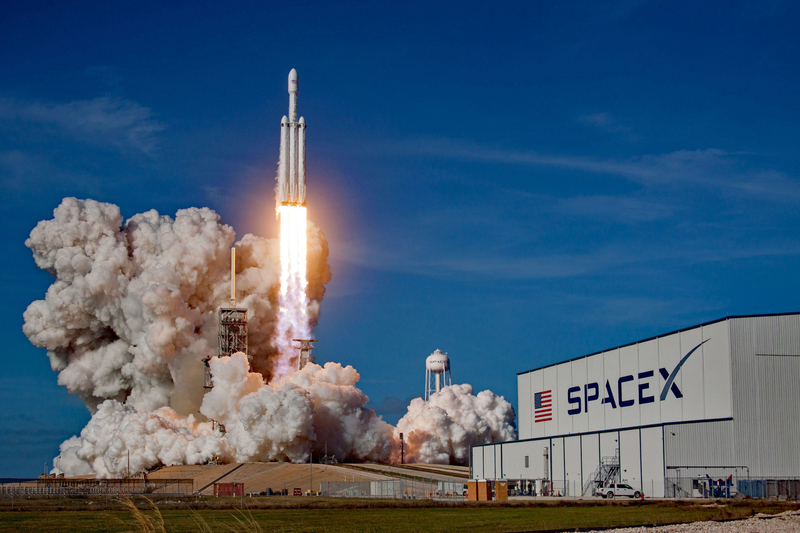
The company opened its public life with a launch, not a metaphorical one. About an hour before the market bell, a Falcon 9 lifted off from Florida carrying Starlink satellites — the rocket’s 650th flight, according to Spaceflight Now — timed, whether by design or coincidence, to land squarely in the news cycle. Musk himself wasn’t in New York. He watched from Starbase, Texas, appearing behind a Nasdaq-branded podium to tell viewers the company wants to take them to the moon, then Mars, and beyond. In Manhattan, SpaceX president Gwynne Shotwell and CFO Bret Johnsen rang the actual opening bell.
Not everyone outside the building was celebrating. Protesters gathered at the Nasdaq MarketSite the day before trading began, tied to allegations that Grok — the chatbot built by xAI, a separate Musk-controlled company with no formal ownership tie to SpaceX — had allowed users to generate non-consensual sexualized deepfake images. It’s a genuinely awkward footnote for a debut this size, and one that underwriters clearly decided wasn’t going to move $75 billion worth of demand, which turned out to be the correct bet, if not necessarily the most comfortable one.
None of this addresses the question that actually matters to anyone holding the stock past the opening month: SpaceX isn’t profitable yet, by the company’s own disclosures, and a $2 trillion valuation on an unprofitable business is a bet on Starship, Starlink’s subscriber math, and a Mars timeline that has slipped before. Aramco’s IPO worked because oil revenue is oil revenue. SpaceX’s works, for now, because enough of Wall Street’s biggest pools of capital decided a rocket company run by the world’s newest trillionaire was worth $135 a share sight unseen. Bankers are already framing this listing as the starting gun for a wave of AI-adjacent IPOs later this year. Whether SpaceX’s stock is still worth $160 when those companies actually price their own deals is a separate bet entirely — and one the market hasn’t been asked to make yet.
