NEW YORK — A profound transformation is unfolding across global financial markets, one that is beginning to rival the internet boom, the smartphone revolution, and even the rise of cloud computing in both scale and ambition. Investors from New York to Singapore are rapidly repositioning portfolios around a single theme: artificial intelligence. Yet unlike previous technology cycles, the defining battle of 2026 is no longer centered on software applications or consumer products. Instead, it is focused on the infrastructure powering the next generation of intelligence, and few individuals stand closer to that epicenter than Elon Musk.
The scale of capital being deployed is unprecedented. Global investors are pouring hundreds of billions of dollars into data centers, advanced semiconductor manufacturing, cloud infrastructure, energy systems, robotics, and next-generation computing networks. Major technology companies are accelerating spending programs at a pace rarely seen outside wartime industrial expansions. Financial institutions that once prioritized defensive positioning are now aggressively increasing exposure to AI-linked assets, convinced that a structural transformation of the global economy is underway.
This shift is not merely altering stock market leadership. It is reshaping capital formation, venture financing, public offerings, corporate strategy, and long-term investment frameworks. What began as enthusiasm surrounding generative artificial intelligence has evolved into a full-scale infrastructure race, drawing participation from governments, sovereign wealth funds, pension managers, hedge funds, and retail investors alike.
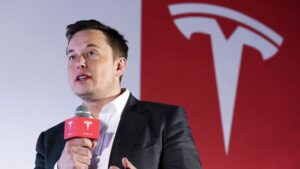
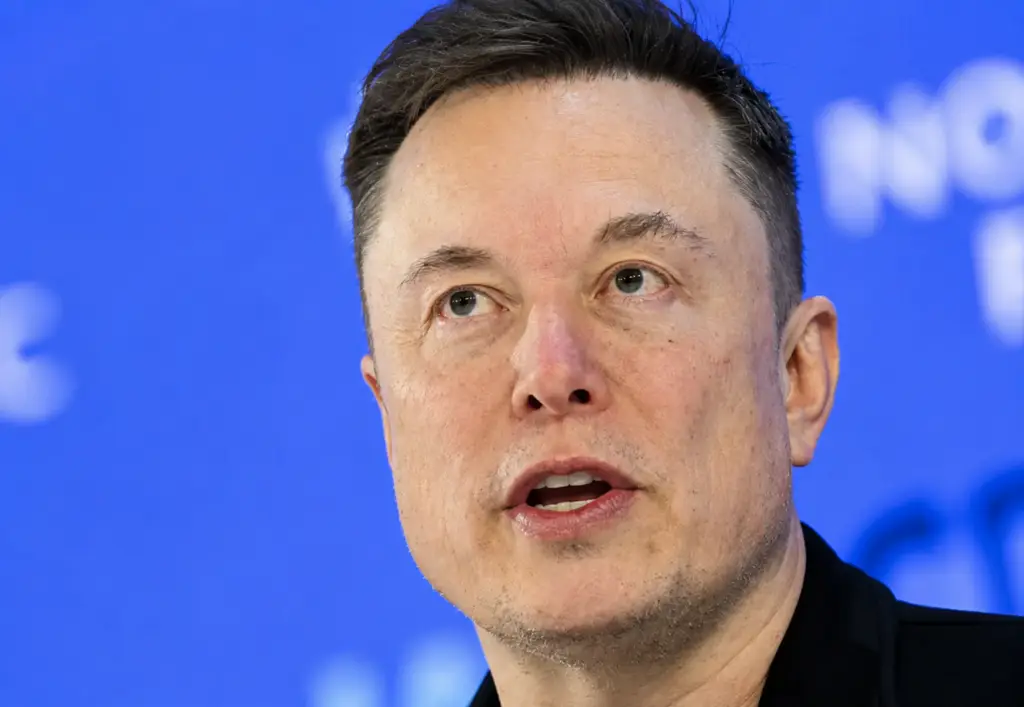
At the center of this movement stands Elon Musk.
For years, Musk was primarily associated with electric vehicles, reusable rockets, and ambitious engineering projects. Today, Wall Street increasingly views him through a different lens. Investors are beginning to see Tesla, xAI, Starlink, robotics initiatives, and SpaceX as interconnected pieces of a broader artificial intelligence ecosystem designed to compete for dominance in what many analysts believe will become the most valuable economic sector of the twenty-first century.
The numbers help explain the growing enthusiasm. Tesla has committed billions of dollars toward artificial intelligence, robotics, and autonomous systems while significantly increasing its capital expenditure plans. Earlier this year, the company confirmed a multibillion-dollar investment into xAI, further strengthening ties between Musk’s automotive ambitions and his broader AI strategy. At the same time, investors have closely monitored Tesla’s rapidly expanding spending plans, which now exceed $25 billion as the company pushes deeper into robotics, autonomous driving, AI infrastructure, and future computing technologies.
For traditional investors, these developments represent a dramatic departure from conventional valuation frameworks. Historically, automotive companies were assessed according to vehicle deliveries, manufacturing efficiency, margins, and cash flow generation. Technology companies, by contrast, often command valuations based on future growth potential, ecosystem strength, intellectual property, and network effects. Musk’s strategic challenge—and opportunity—has been convincing investors that Tesla belongs in the second category rather than the first.
Wall Street appears increasingly receptive to that argument.
Across investment banks and institutional asset managers, analysts are paying less attention to Tesla’s identity as an electric vehicle manufacturer and more attention to its role as an AI infrastructure platform. Autonomous driving systems, robotics development, machine learning capabilities, and AI training infrastructure are becoming central components of the investment thesis surrounding the company. Investors are effectively betting that Tesla’s future value may be determined less by automobiles and more by artificial intelligence.
The broader market environment has amplified this trend. Recent months have witnessed one of the largest fundraising waves in modern financial history, driven largely by investor appetite for artificial intelligence-related opportunities. Global capital markets have experienced record issuance activity as companies seek financing to support AI expansion plans, infrastructure construction, and next-generation technology development. Financial institutions report extraordinary demand for transactions connected directly or indirectly to artificial intelligence.
Perhaps no event better illustrates this phenomenon than the extraordinary investor attention surrounding SpaceX. The company’s public market debut generated global headlines and reinforced the market’s willingness to assign enormous valuations to businesses perceived as beneficiaries of the artificial intelligence era. Investors increasingly view SpaceX not solely as an aerospace company but as a strategic infrastructure asset operating at the intersection of satellite communications, data transmission, computing networks, and future AI deployment capabilities.
The enthusiasm surrounding AI infrastructure extends far beyond Musk’s empire. Major technology companies are dramatically expanding spending plans to secure computing capacity. Industry forecasts suggest that hyperscale technology firms will collectively spend hundreds of billions of dollars this year alone on AI-related infrastructure, while long-term projections point toward trillions of dollars in cumulative investment. Data centers, semiconductor fabrication plants, power generation systems, networking equipment, and advanced computing architectures are becoming the foundational assets of the AI economy.
This investment cycle has given rise to what many strategists describe as the “AI Infrastructure Supercycle.” Unlike previous technology booms that were driven primarily by software innovation, the current cycle demands enormous physical investment. Artificial intelligence requires vast computational resources, massive electricity consumption, advanced cooling systems, specialized semiconductors, and extensive communications networks. Every new generation of AI models increases demand for these resources, creating a feedback loop that continuously attracts additional capital.
For investors, the implications are profound.
If artificial intelligence delivers the productivity gains many analysts anticipate, the economic impact could rival or exceed previous industrial revolutions. Entire industries may be restructured around automation, machine intelligence, predictive analytics, and autonomous systems. Productivity growth could accelerate. Corporate margins could expand. New categories of businesses could emerge.
Yet risks remain significant.
Valuations across portions of the AI ecosystem have risen sharply, leading some analysts to question whether investor enthusiasm is running ahead of economic reality. Critics point to the enormous spending requirements associated with AI infrastructure and note that monetization pathways remain uncertain for many projects. Supporters counter that transformative technologies often appear expensive during their earliest stages and argue that current investment levels reflect the magnitude of the opportunity rather than speculative excess.
For now, however, capital markets continue delivering a clear verdict.
Money is flowing toward artificial intelligence.
Institutional investors continue increasing exposure.
Technology remains the dominant investment narrative of 2026.
And Elon Musk, more than any other individual, has become one of the central figures shaping that narrative.
The question facing Wall Street is no longer whether artificial intelligence will transform the economy.
The question is who will control the infrastructure powering that transformation—and whether today’s unprecedented wave of investment will ultimately justify the extraordinary expectations now embedded within global markets.
The Federal Reserve’s Dilemma
While artificial intelligence continues to dominate headlines and attract capital, another force is quietly shaping the trajectory of financial markets: monetary policy.
On one hand, economic growth remains resilient. Corporate investment remains strong. Labor market conditions continue to exceed expectations. AI-related spending is generating a powerful wave of economic activity across multiple sectors.
On the other hand, inflationary pressures have proven far more persistent than policymakers anticipated.
Recent economic data has forced investors to reconsider expectations regarding future interest-rate cuts. Several major financial institutions have revised their forecasts, while futures markets have increasingly begun pricing scenarios that include the possibility of tighter monetary policy rather than easier financial conditions.
High-growth companies derive much of their valuation from future earnings expectations. When interest rates remain elevated, those future cash flows become less valuable in present-value terms, placing pressure on technology valuations.
Historically, this relationship has been one of the most important forces influencing growth stocks.
Yet the current cycle appears different.
Even as bond yields remain elevated and inflation concerns persist, investors continue allocating unprecedented sums toward artificial intelligence infrastructure. Many portfolio managers believe the long-term economic benefits of AI could outweigh near-term monetary policy risks.
This tension has become one of the defining themes of 2026.
Wall Street is simultaneously betting on technological acceleration while preparing for the possibility of tighter financial conditions.
Rarely have investors attempted to navigate both realities at the same time.
The Nasdaq’s New Leadership Structure
One of the most remarkable developments in modern financial markets is the degree to which artificial intelligence has concentrated investor attention.
Over the past year, capital flows have increasingly focused on a relatively small group of companies perceived as direct beneficiaries of the AI revolution.
The phenomenon has created a market structure unlike anything seen since the early days of the internet boom.
Investors are no longer simply purchasing technology companies.
They are purchasing access to artificial intelligence.
That distinction matters.
Semiconductor manufacturers are receiving premium valuations.
Cloud-computing providers continue expanding aggressively.
Data-center operators are attracting record investment.
Companies with exposure to AI infrastructure are increasingly viewed as strategic assets rather than ordinary businesses.
The result is a powerful concentration of market leadership.
Institutional investors increasingly describe AI as the primary engine driving equity-market performance.
Corrections continue to occur, but market participants generally view them as periods of repositioning rather than a rejection of the broader investment thesis.
The Hidden Risk: An AI-Induced Inflation Cycle
One risk receiving growing attention among economists is the possibility that artificial intelligence itself could contribute to inflationary pressures.
The theory appears counterintuitive.
AI is often expected to increase productivity and reduce costs.
However, the infrastructure required to support AI deployment demands extraordinary levels of spending.
Massive data centers require electricity.
Electricity requires generation capacity.
Generation capacity requires investment.
Semiconductors require advanced manufacturing.
Manufacturing requires capital.
Every layer of the AI economy requires substantial physical resources.
As corporations compete to secure computing power, demand for energy, industrial equipment, specialized labor, and advanced components continues to increase.
Some strategists now argue that AI-related spending may become an independent source of inflation during the coming years. Rising costs associated with chips, power generation, and infrastructure construction have already become a subject of discussion among economists and investors.
If those concerns prove accurate, financial markets could face an unusual scenario in which the very technology expected to boost productivity simultaneously contributes to higher inflation.
That possibility remains one of the least understood risks in today’s investment landscape.
Why SpaceX Matters Beyond Aerospace
Much of the discussion surrounding Elon Musk focuses on Tesla and artificial intelligence.
Yet some institutional investors increasingly believe SpaceX may ultimately become the most strategically important asset within Musk’s broader ecosystem.
The reason extends far beyond rockets.
SpaceX controls launch capabilities.
It controls satellite deployment.
It controls communications infrastructure through Starlink.
And increasingly, it is positioning itself within the future architecture of artificial intelligence infrastructure.
Recent developments involving satellite-based computing and large-scale orbital infrastructure projects have generated significant attention across capital markets. Investors see potential applications ranging from global connectivity to distributed computing and future AI deployment systems.
Whether these ambitions ultimately succeed remains uncertain.
However, their potential scale is difficult to ignore.
For investors searching for exposure to long-term technological transformation, SpaceX increasingly represents more than an aerospace company.
It represents a bet on the future architecture of global computing.
The Bubble Question Nobody Can Ignore
Every major investment cycle eventually faces the same question:
Has enthusiasm exceeded reality?
The AI boom is no exception.
Skeptics argue that current valuations already reflect years of future growth.
They point to elevated multiples, aggressive fundraising activity, and increasingly speculative projections regarding future revenue opportunities.
Supporters counter that transformative technologies often appear expensive before their full economic impact becomes visible.
Both arguments contain elements of truth.
History shows that revolutionary technologies create enormous wealth.
History also shows that financial markets frequently overestimate short-term outcomes while underestimating long-term consequences.
The challenge facing investors is distinguishing between legitimate innovation and excessive speculation.
That task becomes increasingly difficult as capital continues flowing into the sector.
Recent fundraising activity has reached historic levels, with investors demonstrating extraordinary appetite for AI-linked assets despite ongoing macroeconomic uncertainties. Global fundraising volumes have reached records, reinforcing both optimism and concerns regarding potential overheating.
The Second Half of 2026
Looking ahead, the remainder of 2026 may determine whether the current rally evolves into a sustainable economic transformation or encounters a significant correction.
Several factors will be closely monitored.
Inflation data.
Federal Reserve policy decisions.
Corporate earnings.
AI infrastructure spending.
Energy markets.
Geopolitical developments.
And perhaps most importantly, evidence that artificial intelligence is generating measurable economic returns.
Investors are no longer satisfied with promises.
They increasingly demand proof.
Can AI improve productivity?
Can it increase profitability?
Can it justify the trillions of dollars currently being invested?
The answers to those questions will shape the next chapter of global markets.
Conclusion: The New Financial Order
What is happening today extends beyond a conventional market cycle.
The world is witnessing the emergence of a new financial order built around artificial intelligence, infrastructure, and computational power.
Capital is being reallocated at extraordinary speed.
Governments are competing for technological leadership.
Investors are racing to secure exposure to what many believe will become the dominant economic force of the coming decade.
At the center of this transformation stands Elon Musk.
Whether viewed as a visionary entrepreneur or the most polarizing figure in modern business, Musk has become inseparable from the AI investment narrative.
Tesla, xAI, Starlink, and SpaceX now represent more than individual companies.
They represent a broader bet on the future direction of technology, infrastructure, and global capital markets.
For Wall Street, the stakes could hardly be higher.
If artificial intelligence fulfills its promise, today’s investment boom may ultimately be remembered as the beginning of a new economic era.
If expectations prove too optimistic, investors may confront one of the most significant valuation resets in modern history.
For now, however, the flow of capital continues.
The AI race continues.
And Wall Street continues betting that the future is arriving faster than anyone imagined.