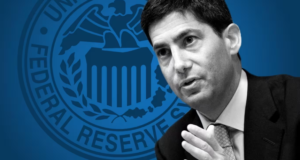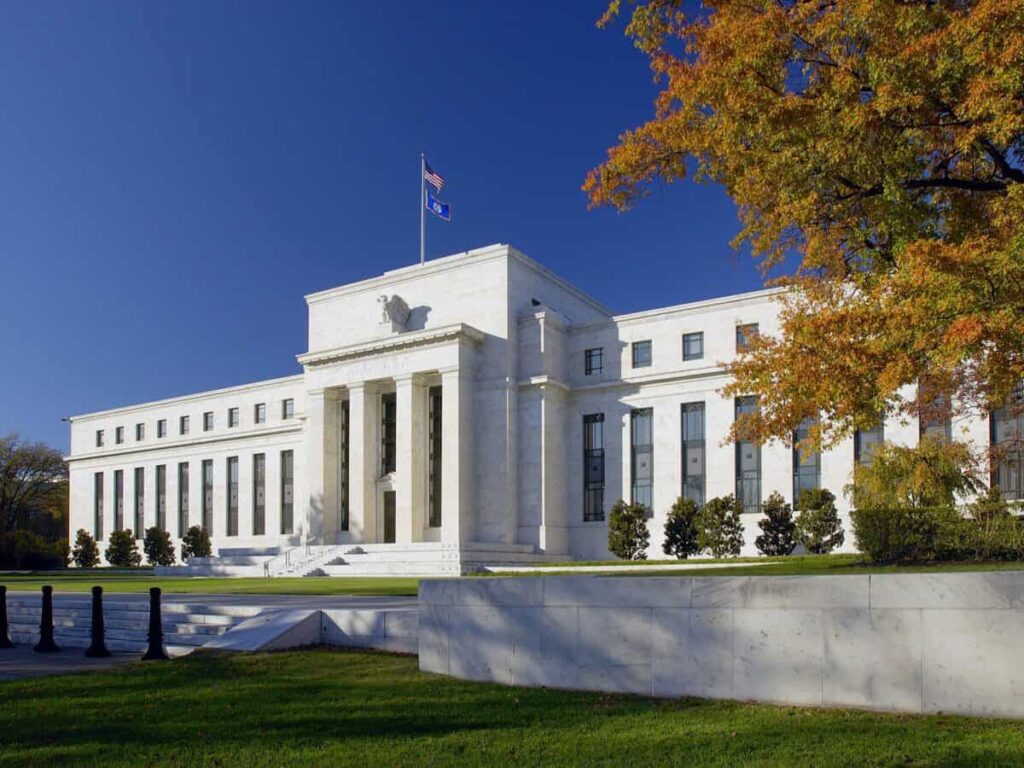
Jerome Powell and the rest of the Federal Open Market Committee sit down on September 15 and 16, their sixth meeting of the year, and traders aren’t even bothering to argue about it anymore. Check CME’s FedWatch tool, which backs out Fed odds from interest rate futures pricing, and a hold sits at roughly 96%. A quarter-point cut gets less than 4%, which in futures-market terms is basically a rounding error dressed up as a possibility. Nobody’s positioning for a surprise here. Desks stopped debating this one weeks ago.
It wasn’t always this settled. Go back to January, when the committee opened 2026 by pausing after three consecutive cuts in the back half of 2025 — moves that had brought the rate down to around 3.6%. At the time, plenty of desks figured that pause was a one-meeting breather before the easing resumed. Instead it’s held through March, April, June, and July, and now, barring a genuinely surprising inflation print in the next week, September looks likely to make it five.
The committee itself is not of one mind about this, which is worth saying plainly because Fed communications tend to paper over it. There’s a bloc that wants nothing to do with further cuts until core inflation is convincingly back under 2%, and a bloc that’s more worried about a labor market that keeps coming in softer than forecast, revision after revision. Both camps have a case. Core PCE has been parked in the mid-2% range for months now, stickier than the Fed projected a year ago, while payroll growth has repeatedly undershot expectations before getting revised down again after the fact — a pattern that by itself has unnerved a few regional bank presidents more than the headline numbers let on.
Layered on top of the ordinary disagreement is a less ordinary one: pressure from the White House, which has pushed publicly and often for the committee to cut aggressively, arguing that a slowing labor market and a president’s own economic agenda deserve more support than 3.6% money allows. Powell has mostly declined to engage with that directly in press conferences, which is its own kind of answer. Central bankers who feel politically boxed in tend to get more stubborn, not less, and there’s a reasonable read of this year’s five-meeting hold that has less to do with the data and more to do with not wanting the first cut of the year to look like it was extracted rather than earned.
None of this means a cut is off the table for good. The committee’s own projections, going back to earlier this year, still pencil in one more move before year-end — most desks have quietly shifted that expectation to the October or December meeting rather than September, on the theory that policymakers will want at least one more employment report and one more CPI print before committing. If August’s jobs numbers, released a few weeks ago, come in soft enough on revision, that calculus could shift fast; the Fed has been burned before by trusting an initial payrolls number that got cut by half two months later.
What’s actually interesting here isn’t the hold itself — a fifth consecutive pause is not, by any reasonable definition, news. It’s how boring the market has decided to find it. Compare this to September of 2024, when CME odds swung wildly in the days before the meeting between a 25 and 50 basis point cut and traders were genuinely unsure which one they’d get. There’s none of that tension now. Equity markets have priced this meeting as close to a non-event, which either means the Fed has finally succeeded in talking markets into believing its own forward guidance, or it means everyone’s collectively decided the real fight is happening in October and September is just table-setting.
I’d lean toward the second read, mostly because the Fed has spent two years proving it would rather look boring in September than get blindsided in November. Powell doesn’t have a term left to build a legacy on decisiveness. He has one left to build on not getting the last mile of this inflation fight wrong. A committee that’s this divided internally, with this much noise coming from the White House, doesn’t move on a coin flip — it waits for the data to make the decision look inevitable in hindsight. Whether that data shows up by October is the actual question. September 16 just isn’t it.