For more than fifteen years, global investors have operated within a monetary framework defined by one dominant institution: the Federal Reserve.
subsequent inflation shock, the Fed has served as the principal anchor for risk pricing across virtually every major asset class. Equity valuations, Treasury yields, credit spreads, currency markets, and global capital flows have all been shaped by a central bank whose communication strategy became increasingly transparent and predictable.
That era may now be entering a period of profound transformation.
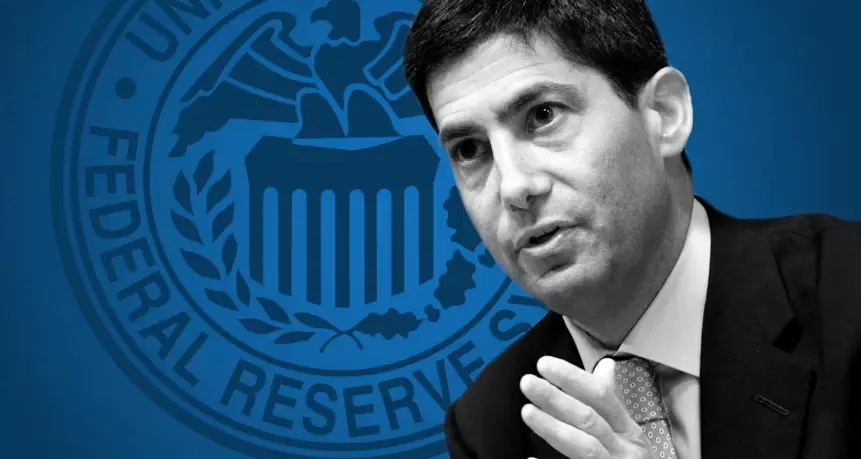
With Kevin Warsh assuming the role of Federal Reserve Chair, Wall Street faces the beginning of a potentially significant shift in the philosophy, communication style, and strategic priorities of the world’s most influential central bank.
This transition comes at a particularly sensitive moment.
Inflation remains above the Fed’s long-term target, labor market conditions continue to demonstrate resilience, fiscal deficits remain historically elevated, and U.S. equity indices are trading near record highs despite growing geopolitical uncertainty.
Against this backdrop, investors are attempting to answer a fundamental question: will the Warsh era represent continuity, or the beginning of an entirely new monetary regime?
Unlike several recent Fed leaders, Warsh does not come from a traditional academic economics background. His experience spans investment banking, public policy, and central banking itself.
Prior to becoming chair, Warsh served as a Federal Reserve governor during the 2008 financial crisis, worked at Morgan Stanley, and later became a prominent voice on monetary policy through his research and public commentary.
This background matters because it shapes how markets interpret his potential reaction function.
Institutional investors understand that central banks are not only defined by their policy decisions, but also by the frameworks through which those decisions are made.
Under Ben Bernanke, Janet Yellen, and Jerome Powell, the Federal Reserve increasingly embraced forward guidance as a tool designed to reduce uncertainty and improve policy transmission.
Quarterly projections, detailed press conferences, and the widely followed “dot plot” became essential components of modern monetary communication.
The objective was straightforward: shape expectations before changing policy.
Over time, however, this approach created unintended consequences.
Financial markets became deeply dependent on central bank communication, with investors often focusing more on subtle changes in language than on underlying economic fundamentals.
Asset prices increasingly reflected expectations about the Fed rather than expectations about corporate earnings, productivity growth, or long-term economic trends.
Warsh has repeatedly suggested that this dependency may have gone too far.
His previous comments indicate a preference for a more restrained communication strategy, arguing that excessive guidance can reduce policy flexibility and encourage markets to overreact to signals that were never intended to function as commitments.
For institutional investors, this shift could prove highly consequential.
If the Federal Reserve reduces its reliance on explicit forward guidance, market participants may need to adapt to an environment characterized by greater uncertainty regarding future policy decisions.
In practical terms, this would likely increase the importance of incoming economic data while reducing the predictive value of official communication.
The implications for equity markets are substantial.
For years, low interest rates and highly transparent monetary policy supported elevated valuations, particularly within technology and growth sectors.
When investors possess confidence in future discount rates, they are often willing to assign premium multiples to companies whose earnings are expected to materialize further into the future.
A less predictable Federal Reserve changes that equation.
Higher uncertainty surrounding future monetary conditions can increase equity risk premiums, placing downward pressure on valuation multiples even if earnings expectations remain stable.
This dynamic is particularly important given the concentration of market performance within a relatively small group of mega-cap technology companies.
Any sustained increase in discount-rate uncertainty could trigger a reassessment of market leadership.
Fixed-income markets face a similar challenge.
Treasury yields increasingly reflect expectations regarding inflation, economic growth, fiscal sustainability, and central bank credibility.
Should Warsh pursue a less transparent communication framework, term premiums could rise as investors demand additional compensation for policy uncertainty.
Such an outcome would have implications extending far beyond government bonds.
Higher Treasury yields influence mortgage rates, corporate borrowing costs, private credit markets, and global funding conditions.
Currency markets are equally sensitive to this transition.
The U.S. dollar derives significant support from confidence in the Federal Reserve’s institutional independence and commitment to price stability.
Any perception that the central bank’s priorities are shifting could alter global capital allocation decisions.
At the same time, Warsh faces a difficult balancing act.
Inflation remains above target despite years of restrictive monetary policy, while economic activity has demonstrated greater resilience than many forecasters anticipated.
Cut rates too aggressively, and inflation expectations risk becoming unanchored.
Maintain restrictive conditions for too long, and financial conditions may tighten excessively, increasing the probability of an economic slowdown.
The challenge extends beyond selecting the appropriate federal funds rate.
Warsh must define a new framework capable of addressing an economy increasingly shaped by structural forces including geopolitical fragmentation, fiscal expansion, artificial intelligence investment cycles, labor market transformation, and supply-chain reconfiguration.
For Wall Street, this moment represents more than a routine leadership transition.
It marks the beginning of a new chapter in monetary policy—one in which investors must reconsider long-standing assumptions regarding transparency, predictability, and the role of central banks in shaping financial markets.
The question is no longer whether the Federal Reserve will influence asset prices.
The question is whether markets are prepared for a Federal Reserve that chooses to influence them differently.
Scenario Analysis: What Comes Next for Rates, Equities, and Global Capital Flows?
For investors, the most important question is not whether Warsh will alter monetary policy immediately, but how markets will adapt to a potentially different decision-making framework.
Three broad scenarios currently dominate institutional forecasts.
The first scenario assumes a gradual normalization path in which inflation continues to moderate while economic growth slows modestly without entering recession.
Under this outcome, the Federal Reserve would likely implement a measured easing cycle while maintaining a restrictive bias against any resurgence in inflation expectations.
Equity markets would initially welcome lower rates, although gains could become increasingly selective as investors differentiate between companies with durable earnings power and those that benefited primarily from abundant liquidity.
The second scenario involves persistent inflation combined with continued labor market resilience.
In such an environment, Warsh may choose to keep rates elevated for longer than markets currently anticipate.
This would likely challenge consensus expectations for rapid monetary easing and place upward pressure on Treasury yields.
Higher financing costs could weigh on rate-sensitive sectors, including technology, real estate, and small-cap equities, while benefiting industries with strong pricing power and resilient cash-flow generation.
The third and least favorable scenario involves a sharp deterioration in economic activity accompanied by financial market stress.
In this case, the Federal Reserve would face a difficult trade-off between supporting growth and preserving its inflation-fighting credibility.
While policymakers would retain significant flexibility to respond through liquidity measures and rate cuts, investors should not assume a return to the extraordinary policy support that characterized previous crises.
This distinction may define the Warsh era.
Rather than prioritizing market stability above all else, the new leadership may place greater emphasis on restoring market discipline and reducing dependence on central bank intervention.
For institutional investors, this requires a fundamental reassessment of portfolio construction.
The investment strategies that performed exceptionally well during the era of ultra-low rates and abundant liquidity may prove less effective in a world defined by higher policy uncertainty and greater macroeconomic dispersion.
Portfolio resilience, balance-sheet quality, and cash-flow durability could become increasingly important relative to pure growth narratives.
Diversification across asset classes, regions, and factors may regain importance after years in which a narrow group of mega-cap technology companies dominated market performance.
Ultimately, the transition to a new Federal Reserve leadership team represents more than a change in personnel.
It marks a potential shift in the relationship between policymakers and financial markets.
For more than a decade, investors benefited from a highly transparent central bank that actively guided expectations and reduced uncertainty.
The next phase may require markets to function with fewer signals and greater reliance on underlying economic fundamentals.
If that transition occurs, volatility could increase in the short term.
However, it may also produce healthier price discovery, stronger capital allocation, and a financial system less dependent on central bank communication.
For Wall Street, the defining question is no longer when the next rate cut will occur.
The defining question is whether investors are prepared for a monetary regime in which uncertainty itself becomes a permanent feature of the investment landscape.
Strategic Conclusion: The End of Monetary Certainty
For more than a generation, financial markets have operated under an implicit assumption: periods of economic stress would ultimately be met with increasingly accommodative monetary policy.
That assumption shaped an entire investment era.
It influenced valuation frameworks, compressed risk premiums, encouraged leverage, and reinforced the belief that central bank communication itself could function as a stabilizing force for global capital markets.
The transition to a new Federal Reserve leadership team raises an increasingly important possibility: the era of monetary certainty may be ending.
This does not imply that the Federal Reserve will abandon its dual mandate or its commitment to financial stability. Rather, it suggests that investors may need to adapt to a policy framework in which uncertainty is no longer viewed as a market failure, but as an unavoidable feature of economic reality.
In such an environment, the role of monetary policy changes fundamentally.
The objective shifts from maximizing predictability to preserving flexibility.
For decades, markets sought precision from central banks. Going forward, policymakers may instead prioritize optionality.
That distinction matters.
A Federal Reserve that values strategic flexibility over detailed forward guidance forces investors to place greater emphasis on underlying fundamentals rather than policy expectations.
Corporate balance-sheet quality, free cash-flow generation, productivity growth, and pricing power could once again become the dominant drivers of long-term returns.
For institutional allocators, this transition may require a reassessment of investment frameworks built during the low-rate era.
The search for alpha is likely to become increasingly dependent on security selection, macroeconomic analysis, and risk management discipline rather than broad exposure to liquidity-driven market trends.
Portfolio construction may evolve toward resilience rather than optimization.
In practical terms, this means emphasizing diversification across factors, sectors, and geographies while maintaining greater sensitivity to duration risk, policy uncertainty, and shifts in global capital flows.
The implications extend beyond asset allocation.
A less predictable monetary environment could ultimately produce healthier market dynamics by strengthening price discovery and reducing excessive dependence on central bank intervention.
Periods of volatility may become more frequent, but volatility itself should not necessarily be interpreted as instability.
Instead, it may represent the natural consequence of a financial system adjusting to a world in which capital is priced more efficiently and risks are distributed more transparently.
For Wall Street, the arrival of Kevin Warsh represents more than a leadership transition.
It may mark the beginning of a broader redefinition of the relationship between policymakers and markets.
The defining challenge for investors is no longer forecasting the timing of the next interest-rate decision.
It is understanding how the underlying rules of monetary engagement may be changing.
Ultimately, the most significant risk facing global markets may not be inflation, growth, or interest rates themselves.
It may be the assumption that the future will resemble the past As a new monetary era begins, investors must confront a more fundamental question How should capital be allocated when certainty is no longer the central bank’s primary objective? The answer to that question may shape the next decade of global investment performance.